Assess for reuse
- Existing extraction hoods
- Ductwork and extraction fans
- Available make-up air facilities

DEMAND-CONTROLLED KITCHEN VENTILATION
Let extraction respond to the cooking line. Connect equipment activity, temperature sensing and zoned control to reduce unnecessary fan operation between busy periods.
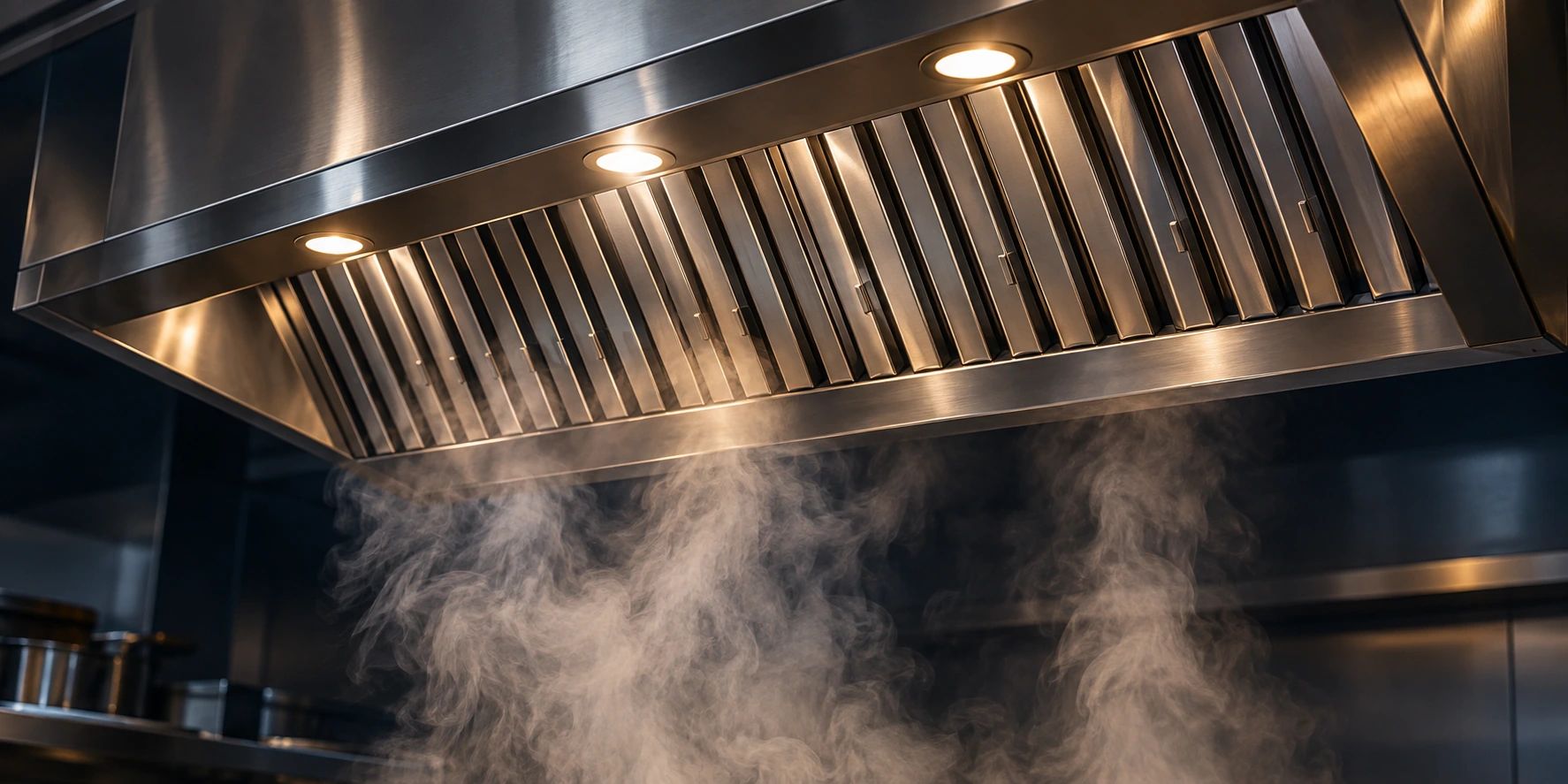
FOLLOW THE COOKING LOAD
A kitchen does not cook at full load all day. Breakfast prep, the lunch rush and quieter periods need different levels of extraction. Running every zone at the same high setting can waste fan energy and remove more conditioned air than necessary.
Demand-controlled kitchen ventilation links cooking activity and temperature signals to zoned dampers and extraction fans. The aim is to direct airflow where it is needed as service changes, with the site’s ventilation requirements guiding the control settings.
HOW THE CONTROL WORKS
Read cooking-equipment activity and temperature at the cooking line.
Identify which cooking zones need extraction.
Adjust zoned dampers to match the active stations.
Coordinate variable-speed extraction fans with demand.
Plan extraction together with the site’s make-up air.
Extraction and make-up air are physically separate systems. Their coordination and control scope are determined for the site.
RETROFIT, WITH A PLAN
A site assessment determines equipment compatibility, reuse and the scope of the retrofit.
MEASURE THE DIFFERENCE
Track fan operation and energy use through comparable service periods before and after the upgrade. Check how the hoods capture cooking emissions during peak service, alongside airflow and make-up air.
The opportunity depends on your cooking load, operating hours and existing system. Use the site’s baseline to identify the benefit of demand-based control.
Start by assessing the hoods, ducts, fans, make-up air and equipment interfaces. Suitable existing components can be retained; the site assessment determines the final scope.
A kitchen layout, cooking-equipment list, photographs of the hoods and ducts, fan nameplate details and typical operating hours are useful starting points.
Cooking load, operating hours, fan control and the existing ventilation arrangement all affect the result. A kitchen with long quiet periods may have a different opportunity from one running at peak load throughout service. Compare site data before and after the upgrade while checking hood capture and airflow.
This is a separate kitchen ventilation control solution. It is planned around the existing ventilation system and available cooking-equipment signals.
START WITH YOUR EXISTING KITCHEN
Tell us about your cooking line, ventilation system and operating hours.